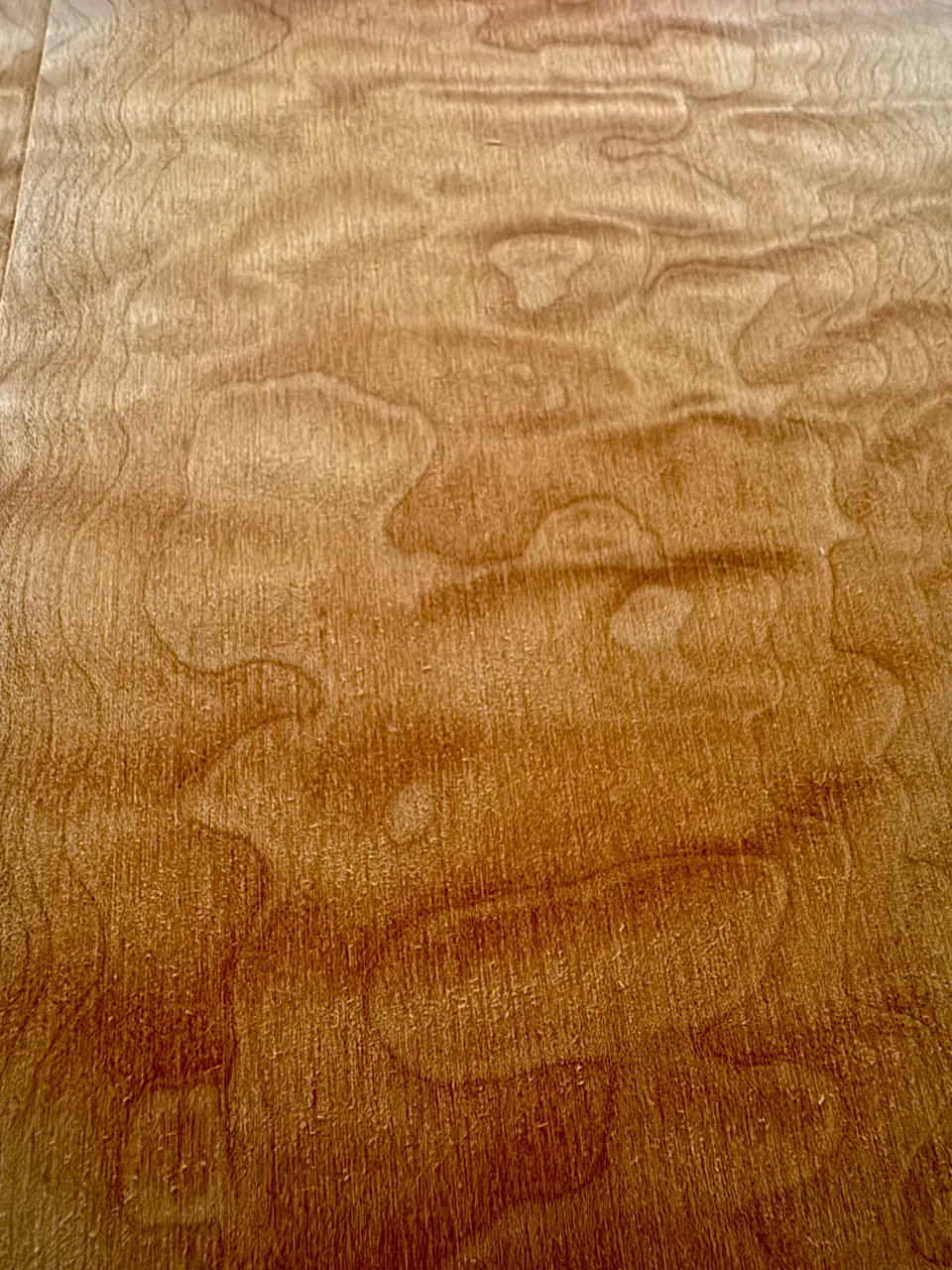
French polish is romanticized because it is beautiful, old, and visibly handmade. All of that is true, but none of it is the main reason I am drawn to it. What I love is that it refuses force. It does not let you bully a surface into readiness. It asks for patience, lightness, repetition, and the willingness to stop before your ambition outruns the material.
A lot of modern life rewards speed, coverage, and concealment. French polish does almost the opposite. It reveals whether the surface beneath it was actually prepared with care. It does not forgive laziness. It does not hide unevenness behind thickness. If the wood is beautiful, it lets the wood stay the subject. If the work underneath is sloppy, it tells on you.
That honesty is part of the appeal. So is the tactility. A well-polished instrument feels less coated than accompanied. The finish is there, but barely. Light seems to enter it instead of just bouncing off. You do not get the sense that the guitar has been entombed in protection. You get the sense that it has been carefully dressed.
It is also fragile in the way some worthwhile things are fragile. Not weak, exactly, but intimate. It carries the mark of touch more readily than harder, thicker finishes, and that has always felt appropriate to me for certain instruments. A guitar is not a countertop. It is meant to live close to the body, to age visibly, to tell the truth about being used.
French polish is time-intensive, occasionally maddening, and easy to get wrong in small humiliating ways. It teaches restraint because overworking it is usually worse than underworking it. In that sense it resembles a lot of good craft, and maybe a lot of good art: the hardest part is often knowing when your hand should leave the thing alone.